Why provenance matters
AI can produce a fluent answer that feels remembered even when it is incomplete. A digital memory should therefore do two things: retrieve the likely answer and show the item that supports it. That evidence lets you verify dates, wording, and context.
Source tracking also prevents a subtle archive problem. A copied paragraph without its URL, author, or screenshot becomes detached knowledge. Months later, you may remember the claim but have no responsible way to use it.
How leading tools approach sources
Recall builds an AI knowledge base around saved web content and notes. Readwise Reader is particularly strong for articles, PDFs, newsletters, and highlights. Raindrop.io keeps bookmark metadata and searchable archived pages. OwnMynd focuses on the iOS share sheet and preserves the memory card or source with a grounded answer.
These are not interchangeable. A researcher processing journals may prefer Reader. A visual collector may prefer mymind. Someone trying to retrieve a TikTok recipe, screenshot, or Safari page from an iPhone may value OwnMynd's capture path.
A source-tracking checklist
Look for the original URL, title, capture date, content type, and an immutable view of the saved item. For AI answers, check whether citations point to your actual material rather than a generic web search. Ask whether edits and deletions propagate predictably.
Finally, test failure. Search for something you never saved. A trustworthy memory app should say it cannot find support instead of improvising an answer.
The privacy question
Automatic source tracking can expose sensitive browsing or personal screenshots if the architecture is careless. Prefer products that explain what is processed on-device, what is synced, and what reaches an AI provider.
OwnMynd's published model is local-first: raw images and files stay on-device, while optional cloud processing uses extracted text snippets. That is a useful distinction, but users should still avoid storing credentials, recovery codes, or regulated records in any general-purpose memory app.
Try recall without the filing
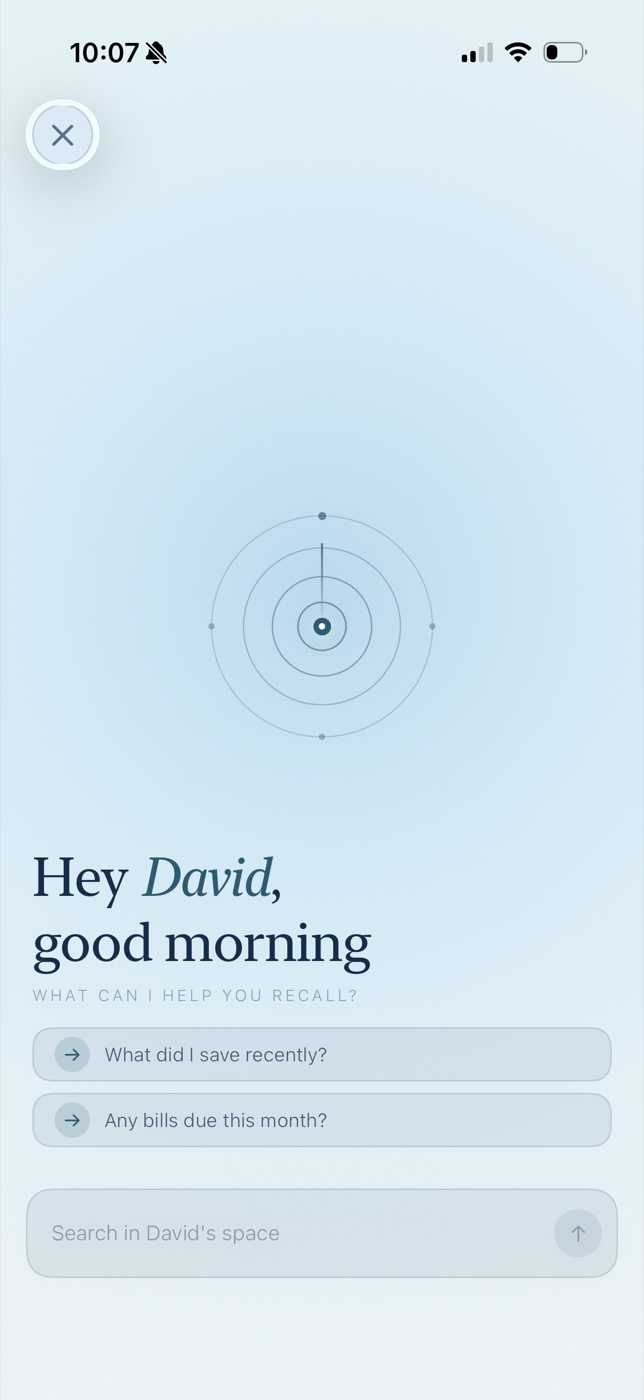
OwnMynd AI is a private memory app for iPhone and iPad. Save screenshots, links, notes, documents, and social content, then retrieve them with the source attached.
View on the App StoreFrequently asked questions
What is source attribution in an AI memory app?
It is a link or attachment from an answer back to the specific saved item that supports it.
Can a source-backed answer still be wrong?
Yes. Retrieval or summarisation can still fail, which is why the original source must remain easy to inspect.
Does saving a link guarantee it will remain available?
No. Pages can change or disappear. Use a tool with snapshots or archives when long-term preservation is essential.
Research sources
Product capabilities were checked against official pages from mymind, Recall, Fabric, Raindrop.io, Obsidian, Notion, Zotero, Readwise Reader, Evernote, and OneNote. Comparison structure was also reviewed against NotePlan's Notion alternatives and Obsidian alternatives guides. Features and pricing can change; verify critical details with the provider.
Continue reading
- How to Save and Manage Web Links, Notes, and Social Media Posts
- The Best iOS Apps for Organizing Research and Reference Material
- The Best Evernote Alternatives in 2026
Editorial note: Product capabilities change. This guide was reviewed against public product information available on 14 June 2026. We identify where OwnMynd is and is not a suitable choice.