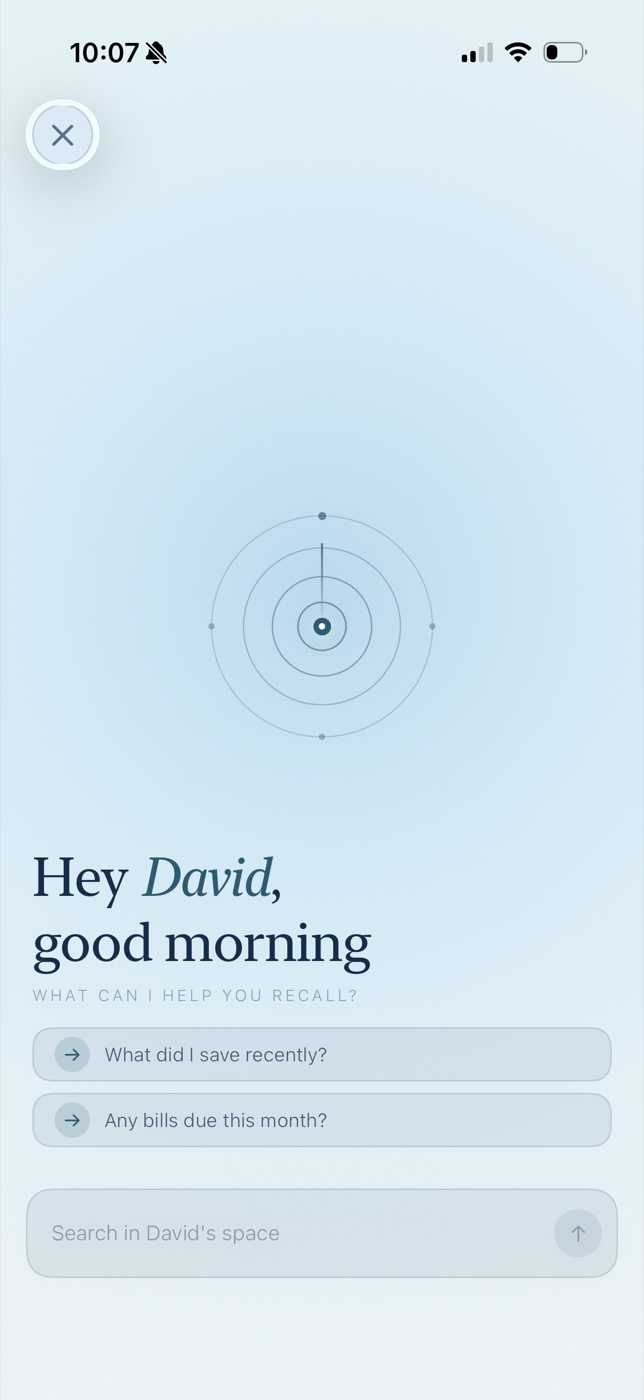
Private is an architecture, not a theme
A dark interface and a privacy page do not make a second brain private. The meaningful questions are where files live, how search indexes are created, whether sync is encrypted, what an AI provider receives, how long data is retained, and whether the provider trains on it.
Your risk also depends on content. A recipe archive and a client case file should not share the same policy simply because both are “notes.”
A practical privacy checklist
Prefer on-device OCR and semantic indexing. Keep raw images and documents local where possible. Treat cloud AI as an explicit enhancement rather than a hidden requirement. Verify backup behaviour, account deletion, analytics, and export.
OwnMynd says screenshot analysis, text recognition, indexing, and encrypted storage occur on-device. Optional cloud AI receives anonymised text snippets rather than raw files, with published retention limits and no model training on user data.
OwnMynd or Obsidian?
Obsidian gives technical users direct control over local Markdown files and a mature ecosystem for writing and linking. It rewards deliberate structure. OwnMynd is aimed at effortless mobile capture and question-based retrieval across mixed media.
Choose based on behaviour. If you enjoy writing and curating connected notes, Obsidian is compelling. If your information arrives through screenshots, links, social apps, and camera captures, OwnMynd removes more friction.
Backups are part of privacy
Local-only storage can reduce exposure but increase loss risk. Use device backups you understand, protect the account behind them, and test recovery before relying on the archive. Privacy without recoverability is fragile.
Keep passwords, recovery codes, identity documents, medical records, and highly regulated data in tools designed for those categories. A second brain should not become an indiscriminate vault.
Try recall without the filing
OwnMynd AI is a private memory app for iPhone and iPad. Save screenshots, links, notes, documents, and social content, then retrieve them with the source attached.
View on the App StoreFrequently asked questions
Does local-first mean no cloud is ever used?
Not necessarily. It means the local device is primary. Sync or optional AI may still use cloud services, which should be documented.
Is iCloud fully private?
Apple provides strong security, but protection varies by data category and settings. Review Advanced Data Protection and the app's own sync design.
Can I use a private second brain offline?
Core local storage and search should work offline. Features that call a cloud model will require connectivity.
Research sources
Product capabilities were checked against official pages from mymind, Recall, Fabric, Raindrop.io, Obsidian, Notion, Zotero, Readwise Reader, Evernote, and OneNote. Comparison structure was also reviewed against NotePlan's Notion alternatives and Obsidian alternatives guides. Features and pricing can change; verify critical details with the provider.
Continue reading
- Which Digital Memory App Tracks Content Sources Automatically?
- How to Save and Manage Web Links, Notes, and Social Media Posts
- The Best iOS Apps for Organizing Research and Reference Material
Editorial note: Product capabilities change. This guide was reviewed against public product information available on 14 June 2026. We identify where OwnMynd is and is not a suitable choice.